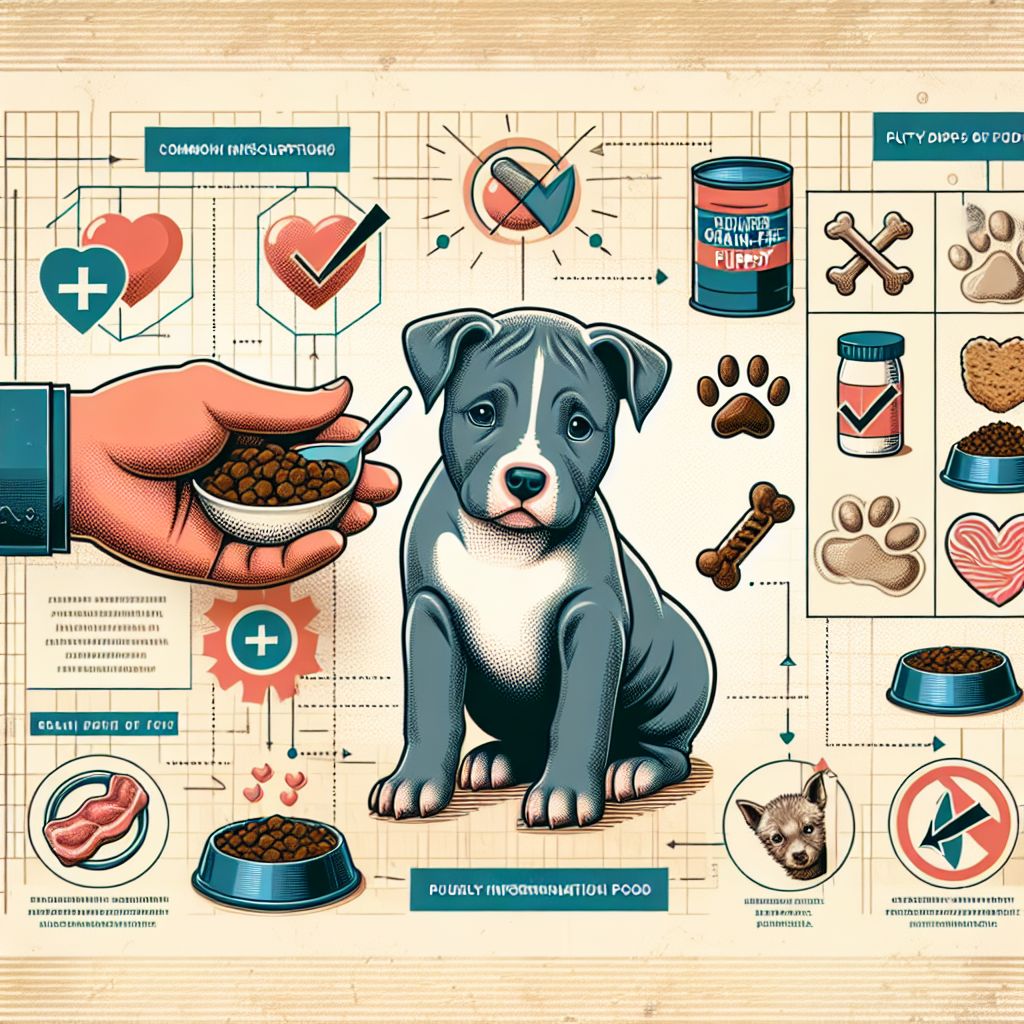
Key Takeaways
- Grains can be a nutritious part of a pitbull puppy’s diet and provide essential nutrients.
- Grain-free diets for pitbull puppies are not inherently better and may lack certain nutrients.
- It’s crucial to understand the nutritional needs of pitbull puppies to ensure they grow up healthy and strong.
- Food labels should be read carefully to distinguish between marketing gimmicks and genuine nutritional claims.
- Consulting with a veterinarian can help tailor a diet plan that’s right for your pitbull puppy’s individual needs.
Dispelling Pitbull Puppy Diet Myths
When it comes to feeding pitbull puppies, there’s a lot of information floating around. Some of it’s helpful, but a lot of it’s as mixed up as a puppy’s toy box. So let’s sort through the mess and get down to what’s really important for your growing pitbull’s diet.
Understanding Your Pitbull Puppy’s Nutritional Needs
Pitbull puppies are like little athletes in training – they need the right balance of proteins, fats, and carbohydrates to develop strong muscles and bones. But there’s a myth that’s been wagging its tail around for too long: the idea that all pitbull puppies should be on a grain-free diet. Let’s take a closer look at why this isn’t necessarily the case.
First off, pitbull puppies need a diet that’s high in protein. This helps them build the muscle mass they’re famous for. Carbohydrates, including those from grains, provide the energy they need to run, jump, and play. Fats are also key for energy, and they keep your puppy’s coat shiny and skin healthy.
Now, some folks think grains are just filler, but that’s not the whole story. Grains like rice, barley, and oats are sources of essential nutrients, including fiber, vitamins, and minerals. They help with digestion and can support a healthy immune system. So, while it’s true that some puppies might be sensitive to grains, for most, they’re a beneficial part of a balanced diet.
The Truth Behind Common Pitbull Puppy Diet Misconceptions
Let’s tackle some of the biggest misconceptions head-on, including the truth behind dog food myths that often mislead pitbull puppy owners.
- Myth: Grain-free means healthier.
- Truth: Not necessarily. While grain-free diets can be healthy, they’re not a one-size-fits-all solution. It’s all about the overall balance of nutrients.
- Myth: Grains cause allergies in pitbull puppies.
- Truth: Allergies can be caused by a variety of ingredients, not just grains. If your puppy has an allergy, it’s important to identify the specific allergen.
- Myth: Pitbull puppies need a raw diet to thrive.
- Truth: Raw diets are controversial and can have risks, such as exposure to pathogens. Cooked diets can be just as nutritious when properly formulated.
Remember, every pitbull puppy is unique. What works for one might not work for another. Therefore, it’s crucial to monitor your puppy’s health and adjust their diet accordingly. If you’re unsure, a chat with your vet can clear up any confusion and help you make the best choice for your furry friend.
Assessing Grain-Free Diets
Grain-free diets have become a hot topic in the dog food aisle, with many pet parents wondering if they should jump on the bandwagon. It’s important to understand that while some puppies may benefit from a grain-free diet, particularly those with specific allergies or sensitivities, it’s not a necessity for all.
The key to a healthy diet for your pitbull puppy isn’t about excluding grains; it’s about ensuring they’re getting a well-rounded meal that meets all their nutritional needs. This includes the right mix of protein, fats, and yes, even carbohydrates. Grains can be a good source of energy and provide dietary fiber, which aids in digestion.
Moreover, the assumption that grain-free equals low-carb is not accurate. Many grain-free diets replace grains with alternative sources of carbohydrates like potatoes or legumes, which can actually lead to a higher carb content. This is why it’s crucial to look beyond the ‘grain-free’ label and evaluate the overall nutritional profile of the food.
Decoding the Grain-Free Trend: Is It Right for Your Puppy?
So, should your pitbull puppy go grain-free? The short answer is: it depends. While some dogs might thrive on a grain-free diet, others may not. It’s all about what suits your puppy best. If your puppy is doing well on a grain-inclusive diet and doesn’t have any health issues that warrant a change, there’s no need to switch.
On the flip side, if you’ve noticed your puppy is experiencing digestive upset, itchy skin, or other signs that may indicate a food sensitivity, it could be worth discussing with your vet whether trying a grain-free diet might be beneficial. However, these symptoms can also be related to many other factors, so it’s important to get a professional diagnosis rather than self-prescribing a diet change.
Addressing the Grain-Free Controversy: Health Implications for Pitbull Puppies
In recent years, there’s been growing concern over the potential link between grain-free diets and dilated cardiomyopathy (DCM), a heart condition, in dogs. Research is ongoing, and while no direct cause-and-effect relationship has been established, it’s a situation that dog owners should be aware of.
If you’re considering a grain-free diet for your pitbull puppy, it’s essential to ensure that the diet is well-balanced and includes sources of amino acids like taurine, which are important for heart health. Always consult with your veterinarian before making significant changes to your puppy’s diet, especially if you’re considering grain-free options.
Navigating the World of Dog Food Labels
Understanding dog food labels is like learning a new language, but it’s a necessary step to ensure you’re providing the best nutrition for your pitbull puppy. Manufacturers often use terms that sound healthy, but it’s the ingredient list and guaranteed analysis that tells the real story.
Here’s a quick guide on what to look for, including understanding the benefits of grain-free nutrition for your pet.
- Named protein sources: Look for specific meats like “chicken” or “beef” rather than vague terms like “meat meal.”
- Whole grains vs. grain fragments: Whole grains are more nutritious than processed grain by-products.
- Fats and oils: These should also come from named sources, such as “chicken fat” or “flaxseed oil.”
Besides that, pay attention to the order of ingredients. Ingredients are listed by weight, so you want high-quality proteins and nutrients to be at the top of the list. This indicates a higher concentration in the food.
How to Read and Understand Ingredient Lists
When you’re scanning the ingredient list, keep an eye out for real, recognizable foods. Your pitbull puppy doesn’t need a bunch of artificial colors or preservatives. What they need is wholesome, nutritious ingredients that will help them grow up strong and healthy.
Here’s a tip: If you can’t pronounce it, your puppy probably doesn’t need it. Stick to simple, natural ingredients as much as possible. That said, some vitamins and minerals may have complex names but are vital for your pup’s health, so don’t dismiss an ingredient just because it sounds scientific.
Recognizing Marketing Gimmicks vs. Genuine Nutritional Claims
It’s easy to get caught up in the marketing of dog food – terms like “holistic,” “premium,” and “human-grade” can make any food sound like the best choice. However, these terms are not regulated and often don’t have a standardized definition.
What’s more important is to look for foods that meet the nutritional standards set by the Association of American Feed Control Officials (AAFCO). This organization sets guidelines for pet foods in the United States, ensuring that they provide complete and balanced nutrition.
Feeding Your Pitbull Puppy for Optimum Health
Feeding your pitbull puppy isn’t just about what you feed them, but also how you feed them. Consistency is key for your puppy’s digestive system. Stick to a feeding schedule, and avoid frequent changes in their diet to prevent stomach upset.
As your pitbull puppy grows, their nutritional needs will change. You’ll need to adjust their diet accordingly, transitioning from puppy food to adult food at the right time. This is typically around 12 to 14 months of age for pit bulls, but your vet can give you the best advice for your specific pup.
Creating a Balanced Meal Plan
Creating a balanced meal plan for your pitbull puppy involves more than just choosing the right dog food. It’s about providing variety, moderation, and proportion. A mix of dry kibble, wet food, and healthy treats can keep mealtime exciting for your puppy while ensuring they get all the nutrients they need.
Here’s how to do it:
- Start with high-quality puppy food that’s appropriate for your pitbull’s size and breed.
- Measure the food to maintain proper portion control and prevent overfeeding.
- Consider adding some healthy, whole-food treats like carrots or blueberries for variety.
- Stay in tune with your puppy’s appetite and adjust portions as needed for their growth and activity level.
Remember, your pitbull puppy’s health and happiness start with what’s in their bowl. By understanding their nutritional needs, reading labels carefully, and providing a balanced diet, you’ll set them up for a lifetime of wellness.
Frequently Asked Questions (FAQ)
As a pet parent, you probably have a lot of questions about your pitbull puppy’s diet. Here are some answers to the most common queries:
Is a grain-free diet beneficial for a Pitbull puppy with allergies?
It depends on the allergy. If your vet has confirmed that your puppy is allergic to a specific grain, then yes, a grain-free diet can help manage this condition. However, grains are not a common allergen for dogs, and many puppies do well with grains in their diet. It’s essential to identify the exact cause of the allergy before switching to a grain-free diet.
How often should I feed my Pitbull puppy?
Pitbull puppies should be fed three to four times a day up until six months of age. After six months, you can reduce feeding to twice daily. Consistent feeding times help regulate their digestion and prevent overeating. Always follow the feeding guidelines on your puppy food’s label, adjusted for your pup’s activity level and growth rate.
Most importantly, avoid free-feeding, which can lead to obesity. Obesity is a significant health risk for pit bulls, as it can cause joint problems and other health issues as they grow.
What should I do if my Pitbull puppy doesn’t seem to like grains?
If your pitbull puppy turns up their nose at grains, it could be a matter of taste or texture. Try introducing grains in different forms, such as cooked brown rice or oatmeal mixed with their regular food. You can also experiment with different grain-inclusive brands to find one that your puppy enjoys.
However, if your puppy consistently refuses grains or shows signs of digestive discomfort, consult your veterinarian. They can rule out any underlying issues and recommend alternatives.
Are there specific brands of puppy food recommended for Pitbulls?
There’s no one-size-fits-all answer to the best brand for pitbull puppies, as each puppy’s needs can vary. Look for brands that use high-quality ingredients and have a strong nutritional profile. Foods that meet AAFCO guidelines for “complete and balanced” nutrition for puppies are a good place to start. Your vet can also recommend brands that are suitable for your pitbull puppy’s specific needs.
How can I tell if my Pitbull puppy is getting the right nutrients?
You can tell if your pitbull puppy is getting the right nutrients by observing their overall health and vitality. Look for a shiny coat, clear eyes, consistent growth, and good energy levels. Regular check-ups with your vet can also ensure that your puppy’s diet meets their nutritional needs. Your vet can perform blood tests to check for any deficiencies and adjust your diet accordingly.
Also, keep an eye on their stool quality. Healthy digestion often results in firm, well-formed stools. If your puppy’s stools are consistently loose or irregular, it may be a sign that their diet needs adjusting.
Many pet owners are switching to grain-free diets for their dogs, believing that they are healthier and more natural. However, it’s essential to understand the nutritional needs of your Pitbull puppy before making such changes. Grain-free diets can be beneficial in certain cases, but they are not necessary for all dogs. It’s important to consult with a veterinarian to determine the best diet for your pet’s individual needs.