When it comes to raising a healthy pitbull puppy, understanding their hydration needs is as crucial as a balanced diet and regular exercise. Just like us, puppies need water to keep their bodies functioning properly. It’s not just about quenching thirst; water plays a vital role in digestion, temperature regulation, and joint health. Therefore, making sure your pitbull puppy stays well-hydrated is a fundamental part of their care.
Let’s dive into the essentials of keeping your pitbull puppy hydrated, ensuring they have a happy, energetic, and healthy life ahead.
Key Takeaways
- A pitbull puppy needs approximately 0.5 to 1 ounce of water per pound of body weight each day.
- Setting up a water schedule helps prevent dehydration and overhydration, both of which can be harmful.
- Signs of dehydration include lethargy, dry gums, and excessive panting. If you notice these, it’s time to take action.
- Encouraging water intake can be as simple as placing multiple water bowls around the house and making sure the water is fresh.
- Consult with a vet if you’re unsure about your puppy’s hydration needs or if you suspect any health issues.
Staying Hydrated: The Core of Pitbull Puppy Health
Hydration is more than just drinking water; it’s about maintaining the delicate balance of fluids in your puppy’s body. This balance is essential for transporting nutrients, flushing out toxins, and ensuring that every cell in their body works just right. Without enough water, your pitbull puppy can quickly become dehydrated, leading to more serious health issues down the line.
Why Hydration Matters for Your Furry Friend
For pitbull puppies, staying hydrated is particularly important. They’re active and muscular, which means they can get dehydrated faster than less active breeds. Water facilitates their rapid muscle movements and helps cool them down after playtime. It also supports their growing bodies by aiding in the development of healthy cells and cushioning their joints.
How Much Water is Just Right
- For every pound your pitbull puppy weighs, they should drink about 0.5 to 1 ounce of water.
- Activity level, weather conditions, and diet all play a part in how much water they need.
- Always provide fresh, clean water and replace it several times a day to encourage them to drink.
Most importantly, keep in mind that these are general guidelines. Each puppy is unique, and their needs can vary. That’s why it’s important to monitor your pitbull’s water intake and adjust as needed.
Recognizing the Red Flags of Dehydration
Knowing the signs of dehydration can help you take quick action to prevent any serious health consequences. Some common signs include:
- Lethargy or decreased energy
- Dry gums and nose
- Excessive panting or drooling
- Sunken eyes
- Loss of appetite
If you notice any of these symptoms, it’s essential to provide water immediately and consider consulting your veterinarian, especially if the symptoms persist.
Quenching Thirst: How to Get It Right
Now that we know the importance of hydration and how much water your pitbull puppy needs, let’s talk about how to ensure they’re getting enough. Setting up a water schedule can be a game-changer. It helps you keep track of their intake and establish good habits early on.
Setting Up a Water Schedule
Creating a water schedule for your pitbull puppy doesn’t have to be complicated. Here are some simple steps to follow:
- Provide water first thing in the morning, after each meal, following playtime, and before bedtime.
- During house training, control water intake in the evening to help prevent accidents overnight.
- Always supervise your puppy to ensure they’re drinking enough but not too much.
Remember, while a schedule is helpful, it’s also important to be flexible. If it’s a hot day or your puppy has been particularly active, they’ll need more water. Always keep an eye on the water bowl and refill it whenever it’s running low.
Age-Specific Needs
As your pitbull puppy grows, their water needs will change. A young puppy who’s still nursing might not drink as much water since they’re getting hydration from their mother’s milk. But as they wean and start eating solid food, their need for water increases. Always make sure there’s water available, especially during and after this transition period. For more detailed guidance, consider reviewing this puppy water schedule to ensure proper hydration.
Younger puppies will need more frequent access to water throughout the day as they’re more prone to dehydration. But don’t worry, as they grow and their bladder control improves, you’ll find a rhythm that works for both of you.
Adjusting for Activity Levels
Active puppies need more water. It’s as simple as that. After a long walk or a play session, your pitbull puppy will be thirsty. Always offer water after these activities to help them rehydrate. If you’re planning a particularly active day, bring along a portable water dish to ensure they can hydrate on the go.
It’s also worth noting that if your puppy is sick or has been vomiting or experiencing diarrhea, they’ll need extra water to compensate for the loss of fluids. In these cases, always consult with your vet to determine the best course of action.
Keeping an Eye Out: Signs of Dehydration
Dehydration can sneak up quickly, so it’s important to be vigilant. Besides the signs already mentioned, there are a couple of simple tests you can do at home to check for dehydration:
- Gently lift the skin between your puppy’s shoulder blades. If it doesn’t snap back quickly, they might be dehydrated.
- Check their gums. If they’re sticky or dry, that’s another warning sign.
If you’re ever in doubt, it’s better to be safe and get your vet involved.
Spotting Health Issues Early
Staying on top of your pitbull puppy’s hydration can also help you spot potential health issues early. If you notice changes in their drinking habits, it could be a sign of an underlying problem. Drinking too little or too much can both be red flags. If you’re ever concerned about your puppy’s health, don’t hesitate to reach out to your vet.
When to Seek Veterinary Help
If your puppy is showing signs of severe dehydration or if you suspect they’re not well, contact your vet immediately. Symptoms like persistent vomiting or diarrhea, lethargy, or changes in urination are urgent and require professional attention. Your vet can provide the necessary treatment to prevent the situation from getting worse.
Hydration Helpers: Tips and Tricks
Encouraging your pitbull puppy to drink enough water doesn’t have to be a chore. There are plenty of creative ways to make hydration fun and effective:
Example: For puppies that love to play, a floating toy in their water bowl can encourage them to drink more as they fish out their toy.
Other helpful tips include:
- Using ice cubes as a cool treat on a hot day (bonus points if you freeze a treat inside).
- Offering wet food, which has higher moisture content, as part of their diet.
- Setting up multiple water stations around your home to encourage drinking.
Remember, the goal is to make sure your puppy is well-hydrated, not to force them to drink a set amount of water. Pay attention to their habits and adjust as needed.
Choosing the Right Water Bowls
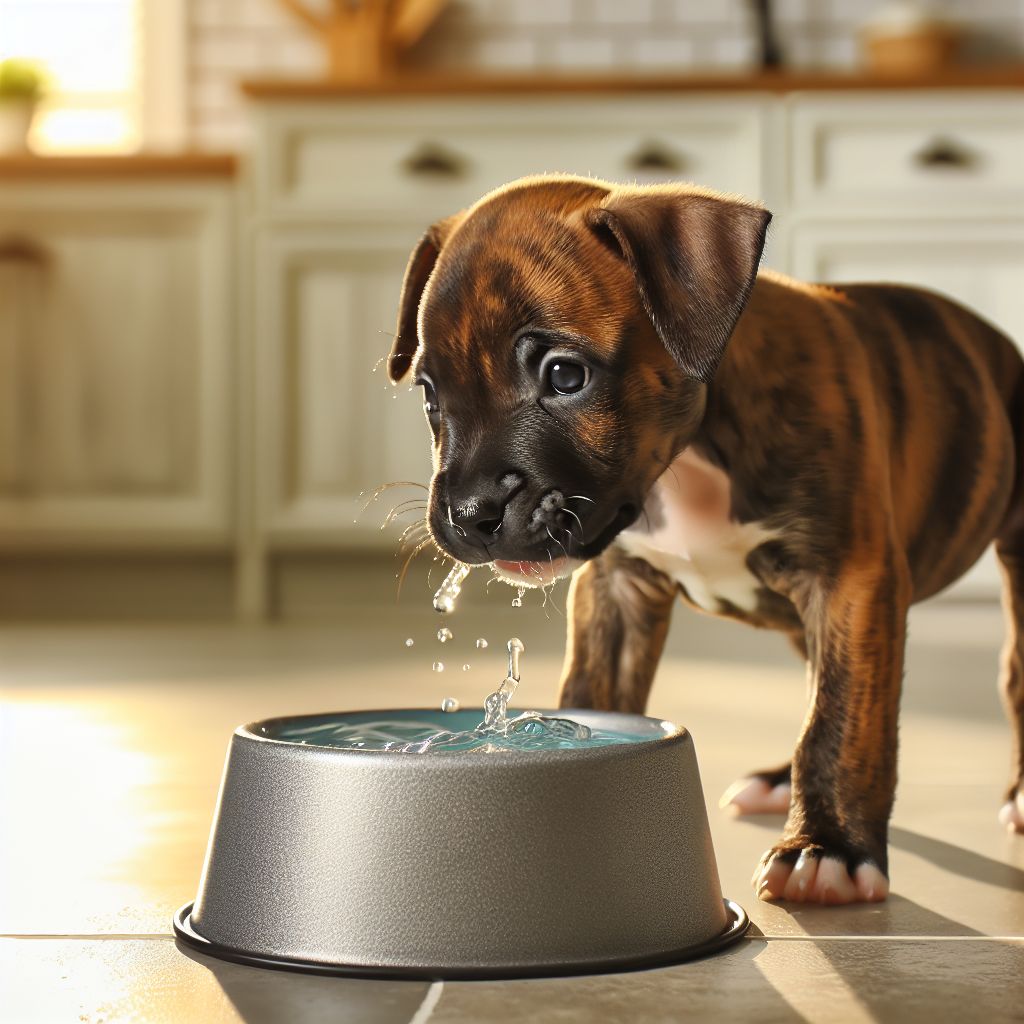
The type of water bowl you choose can also influence how much your puppy drinks. A shallow bowl might be better for small puppies, so they don’t have to strain to reach the water. As they grow, you can switch to a larger, sturdier bowl that won’t tip over easily. Some puppies may prefer a bowl with a slight incline to reduce the need to bend down too far.
Material matters too. Stainless steel bowls are durable and easy to clean, while ceramic bowls can help keep the water cool. Avoid plastic bowls if possible, as they can harbor bacteria and may not be as durable.
Introducing Fun Hydration Habits
Make hydration a part of playtime and training. Use a command like “drink water” and praise your puppy when they take a sip. This not only keeps them hydrated but also helps with obedience training. Remember, positive reinforcement goes a long way in establishing good habits.
Hydration isn’t just about water. It’s about ensuring your pitbull puppy’s health for years to come. With these tips and a bit of vigilance, you’ll have a happy, hydrated, and healthy companion by your side.
FAQ
Got more questions? Here are some quick answers to common concerns:
Can I overhydrate my pitbull puppy?
Yes, it’s possible. It’s known as water intoxication and can be dangerous. Always monitor their intake and avoid letting them drink excessive amounts in a short period, especially after exercise.
Should pitbull puppies have constant access to water?
Generally, yes, but you might want to limit access at night during house training to prevent accidents.
How do I know if my pitbull puppy is drinking enough?
Monitor their water bowl and watch for the signs of dehydration mentioned earlier. If you’re unsure, consult your vet.
What type of water is best for my pitbull puppy?
Clean, fresh tap water is usually fine. If you’re concerned about quality, filtered or bottled water is an option.
Can I monitor my pitbull puppy’s water intake with a water fountain?
Absolutely. Water fountains can be a great way to encourage drinking and keep track of how much they’re drinking. For more detailed guidance on ensuring your pitbull puppy’s health, check out our pitbull puppy diet plan & nutrition guide.