Key Takeaways
- Recognize signs of illness in your Pitbull puppy, such as lethargy, loss of appetite, or digestive issues.
- Consult your vet early on when your puppy is sick to get a proper diagnosis and treatment plan.
- Provide a balanced diet with key nutrients to support your puppy’s immune system and recovery.
- Offer bland, easily digestible foods to a sick puppy and ensure they stay hydrated.
- Monitor your puppy’s response to the diet and seek veterinary advice if there’s no improvement in appetite or energy levels.
Recognizing When Your Pitbull Puppy is Under the Weather
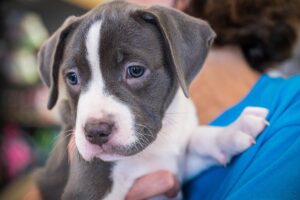
As a loving pet parent, it’s important to be attuned to your Pitbull puppy’s health. You’ll often notice when something’s not quite right – they may be less playful, sleep more, or show less interest in their meals. These are telltale signs that your puppy might be feeling under the weather. It’s crucial to act promptly because puppies can go downhill quickly if they’re not eating or drinking properly.
Some common symptoms to watch out for include vomiting, diarrhea, coughing, sneezing, or a discharge from the eyes or nose. Their little bodies are still developing, and their immune systems are not as robust as those of adult dogs, making them more susceptible to illnesses.
If you notice any of these symptoms, it’s best to consult with your vet right away. They can provide guidance based on your puppy’s specific symptoms and medical history.
Common Symptoms of Illness in Puppies
Knowing the common symptoms of illness can help you act swiftly to support your puppy’s recovery. Symptoms may include:
- Lethargy or reduced energy
- Loss of appetite or refusal to eat
- Vomiting or diarrhea
- Dehydration, which can be checked by gently pinching the skin to see if it snaps back into place
- Unusual whining or other changes in behavior
When to Seek Veterinary Care
If your puppy shows any of these signs, don’t hesitate to contact your vet. Puppies are particularly vulnerable and what might seem like a minor issue can escalate quickly. This is especially true for Pitbull puppies, who are energetic and robust by nature, so any downturn in their vigor is a red flag. Remember, it’s better to be safe and get your puppy checked out even if it turns out to be nothing serious.
Now, let’s focus on what you can do at home to support your sick puppy’s recovery.
Nourishing Your Sick Pitbull Puppy
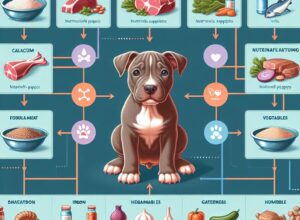
When your Pitbull puppy is ill, proper nutrition becomes even more crucial. The right diet can bolster their immune system and provide the energy they need to fight off illness. But what exactly should you feed a sick puppy?
First and foremost, follow your vet’s advice. They may recommend a special diet depending on your puppy’s condition. For instance, if your puppy has gastrointestinal issues, a bland diet might be in order.
Understanding the Importance of Nutrition During Illness
A balanced diet is always important, but it’s vital when your puppy isn’t feeling well. A sick puppy’s body is under stress, and providing the right nutrients can help reduce that stress. The goal is to offer food that is easy to digest, palatable, and packed with the nutrients necessary for healing.
Key Nutrients for Recovery
Some of the key nutrients that support recovery include:
- Protein: Essential for repairing tissues and maintaining muscle mass.
- Carbohydrates: Provide energy that’s crucial for recovery.
- Fats: A concentrated source of energy and necessary for the absorption of certain vitamins.
- Vitamins and Minerals: Support the immune system and the body’s natural healing processes.
- Water: Critical for hydration, especially if your puppy has been vomiting or has diarrhea.
Let’s break down how to customize your Pitbull puppy’s diet to ensure they’re getting what they need to recover.
Customizing Your Pitbull Puppy’s Diet for Optimal Health
When it comes to feeding a sick Pitbull puppy, the one-size-fits-all approach just won’t cut it. Your puppy’s usual diet may not be suitable when they’re feeling unwell. It’s essential to tailor their food intake to their current health needs, which often means simplifying their diet to make digestion easier and to avoid further irritation.
Adjusting Portion Sizes and Feeding Frequency
Smaller, more frequent meals can be easier on your puppy’s stomach than their regular feeding schedule. Instead of two larger meals a day, try offering smaller amounts several times throughout the day. This can help prevent overwhelming their digestive system and can also encourage them to eat if their appetite is waning.
Hydration: Ensuring Your Puppy Gets Enough Fluids
Hydration is just as important as nutrition. A sick puppy may not feel like drinking water, which can quickly lead to dehydration, especially if they’ve been vomiting or have diarrhea. Make sure fresh water is always available and encourage your puppy to drink. You can do this by offering ice chips or adding water to their food to make it more appealing.
Suitable Foods for a Recovering Puppy
Now, let’s talk about what specific foods can help your Pitbull puppy during its recovery.
Bland Diet Options to Soothe Your Puppy’s Stomach
When your puppy is sick, bland is best. Here are some options:
- Boiled chicken (no skin or bones) and white rice
- Plain, boiled lean ground turkey with plain pumpkin (not pie filling)
- Plain, low-fat cottage cheese
- Boiled, unseasoned sweet potatoes
These foods are gentle on the stomach and provide the necessary nutrients without the added fats and spices that can make symptoms worse.
Healthy Snacks to Boost the Immune System
Between meals, you might want to give your puppy something to nibble on that can also boost their immune system. Here are some healthy snacks:
- Small pieces of apple (without seeds)
- Carrot sticks or baby carrots
- Blueberries
These snacks are not only nutritious but also contain antioxidants that can help support your puppy’s immune system.
What to Avoid: Foods That Can Worsen Symptoms
While there are foods that can help your puppy, there are also those that can do more harm than good:
- Fatty foods, which can be hard to digest
- Spicy foods, which can irritate the stomach
- Dairy products, as many dogs are lactose intolerant
- Anything with onions, garlic, or chives, which can be toxic to dogs
It’s also wise to avoid any drastic changes to your puppy’s diet without consulting your vet first. For more guidance on what to feed a sick dog with no appetite, consider expert advice.
Feeding Tips and Tricks for Convalescent Pitbull Puppies
Even with the best diet, a sick puppy may not have much of an appetite. But there are ways to encourage them to eat.
Encouraging Your Puppy to Eat Despite Low Appetite
Here are a few tips to tempt a sick puppy to eat:
- Warm their food slightly, as the smell can entice them to eat.
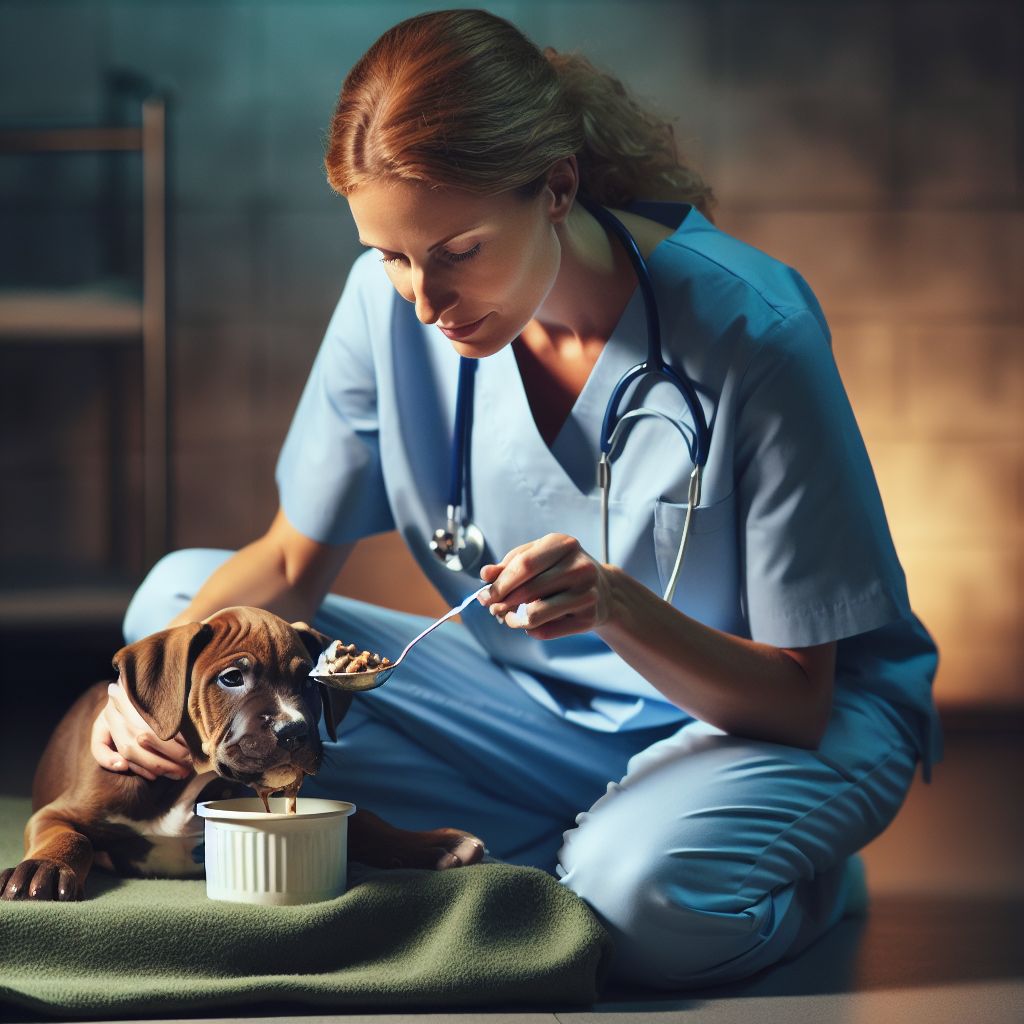
- Hand-feed them, as the personal interaction can stimulate their appetite.
- Use a syringe to gently feed them liquids if they’re refusing solids.
Remember, patience is key. If your puppy refuses to eat, don’t force it. Give them some time and try again later.
Making Meals More Enticing Without Compromising Health
You can also make meals more enticing while keeping them healthy. For example, add a bit of low-sodium chicken broth to their bland diet or mix in a small amount of wet food with their dry kibble to change the texture and flavor.
However, don’t resort to human foods that are rich or unhealthy in an attempt to get them to eat. This can backfire and make their condition worse.
Monitoring Your Puppy’s Progress
As you adjust your puppy’s diet and care for them during their illness, it’s important to monitor their progress.
Signs of Improvement Through Dietary Adjustments
Signs that your puppy is responding well to the dietary changes may include:
- Increased energy and willingness to play
- Regular bowel movements without diarrhea
- A return to their normal appetite
If you’re not seeing any improvement or if your puppy’s condition worsens, contact your vet immediately.
Keeping track of your puppy’s weight and energy levels can also help you gauge how well they’re recovering. Use a journal to note their daily food intake, any symptoms, and their overall behavior. This information can be invaluable to your vet in managing your puppy’s health.
In conclusion, feeding your sick Pitbull puppy requires a delicate balance of the right nutrients, careful monitoring, and lots of love and patience. With the right approach, you can help your puppy get back on their paws in no time.
Monitoring Your Puppy’s Progress
Keeping a watchful eye on your Pitbull puppy’s health as they recover from an illness is essential. This means being vigilant about their behavior, appetite, and physical condition. It’s not just about making sure they eat; it’s about observing how they respond to the nutrition you’re providing.
By closely monitoring their progress, you’ll be better equipped to determine if your puppy is on the mend or if they require further medical attention. Remember, you know your puppy best, and your observations can provide critical insights into their well-being.
Signs of Improvement Through Dietary Adjustments
Positive changes in your puppy’s health can often be linked to the dietary adjustments you’ve made. Look for signs such as:
- A noticeable increase in energy and playfulness
- A return to normal eating habits
- Consistent and healthy bowel movements
These improvements indicate that your puppy’s body is responding well to the care you’re providing, and they’re on the path to recovery.
Keeping Track of Your Puppy’s Weight and Energy Levels
Monitoring your puppy’s weight is a tangible way to measure recovery. Weight loss can be a concern, so if your puppy is maintaining or gaining weight, that’s a good sign. Additionally, take note of their energy levels. Are they more active and alert? This increased vigor typically means they’re feeling better. If you’re unsure about what to look for, your vet can provide you with specific markers for recovery based on your puppy’s health situation.
Don’t forget to document these observations. Keeping a health diary for your puppy can help you track trends over time, which can be incredibly useful during follow-up vet visits.
FAQs
When caring for a sick Pitbull puppy, you’re bound to have questions. Here are some common concerns that pet owners have, along with straightforward answers to guide you.
How Often Should a Sick Puppy Eat?
A sick puppy may not have the same appetite as a healthy one, so it’s important to adjust their feeding schedule accordingly. Offer small, easy-to-digest meals every few hours. If they’re not interested in eating at first, try again later. Continuous refusal to eat for more than 24 hours, however, warrants a call to the vet.
Can I Give My Puppy Over-the-Counter Medications for Upset Stomach?
It’s best to avoid self-medicating your puppy without veterinary guidance. Over-the-counter medications for humans can be dangerous for dogs, and puppies are especially sensitive. If your puppy is experiencing an upset stomach, consult your vet for the safest and most effective treatment options.
What If My Puppy Shows No Interest in Eating After Diet Changes?
If your puppy still isn’t interested in eating after you’ve made diet changes, it’s time to seek professional advice. Your vet may recommend appetite stimulants or investigate if there’s an underlying issue that hasn’t been addressed.
How Long Does it Normally Take for a Puppy to Recover From an Illness With Proper Nutrition?
Recovery time varies depending on the illness and the puppy. Some may bounce back in a matter of days, while others need weeks. Proper nutrition is crucial, but it’s just one part of the recovery process. Always follow your vet’s recommendations and be patient as your puppy heals.
Should I Give My Sick Puppy Supplements?
While supplements can be beneficial in certain circumstances, they should only be given under veterinary supervision. Your vet can determine if your puppy needs supplements based on their specific health needs and ensure that any additional nutrients are provided in the correct dosages.
In summary, caring for a sick Pitbull puppy involves a blend of vigilance, adaptability, and a close partnership with your vet. By providing the right nutrition, monitoring their progress, and seeking professional advice when needed, you can give your puppy the best chance at a full and speedy recovery.