Key Takeaways
- Pitbull puppies need a diet high in protein and fat to support their growth and muscle development.
- Feeding portions and schedules must be adjusted as your puppy grows, usually requiring more frequent meals when they’re younger.
- Essential vitamins and minerals, like calcium, are crucial for bone health, but the balance must be right to avoid growth issues.
- Supplements can be beneficial, especially for Pitbull puppies, but should only be used under a vet’s guidance.
- Always monitor your puppy’s weight and health to ensure their diet is meeting their needs.
Optimal Feeding for Robust Pitbull Puppies
Feeding your Pitbull puppy isn’t just about satisfying their hunger; it’s about building a foundation for a lifetime of health and happiness. Let’s get into the meat of the matter and set your little companion up for success.
Understanding Your Puppy’s Nutritional Needs
Imagine building a house. You’d want the best materials to ensure it stands strong for years, right? The same goes for your Pitbull puppy’s diet. They need the right building blocks, starting with high-quality protein, which acts as the bricks and mortar for muscle development. Fats are like the fuel that keeps the construction going, providing energy and helping your puppy absorb vital vitamins. And let’s not forget about carbohydrates – they’re the workers, supplying the energy needed to keep your puppy playing and growing.
Structuring a Balanced Diet for Growth
Now, how do we translate this into a feeding plan? Think of it as a recipe where every ingredient matters. Start with a high-quality puppy food formulated for large breeds, as it will have the nutrients your pit bull needs in the right amounts. And remember, portion control is key. Too much food leads to weight gain, which can stress developing joints.
The Core of Pitbull Puppy Nutrition
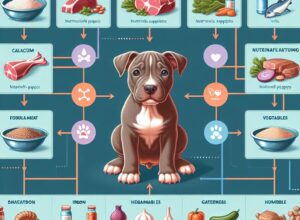
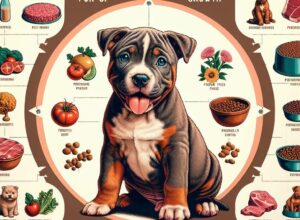
Let’s dive into the core components of your Pitbull puppy’s nutrition. Protein is like the cornerstone of their diet—it’s essential for muscle growth and repair. High-quality puppy food should list real meat as the first ingredient. Then, there are fats, which provide concentrated energy and help your puppy absorb certain vitamins. But it’s not just about protein and fat; the diet must be well-rounded. This means the right mix of carbohydrates for energy, as well as a balance of vitamins and minerals to support all the body’s functions.
Protein: Building Blocks for Muscle Development
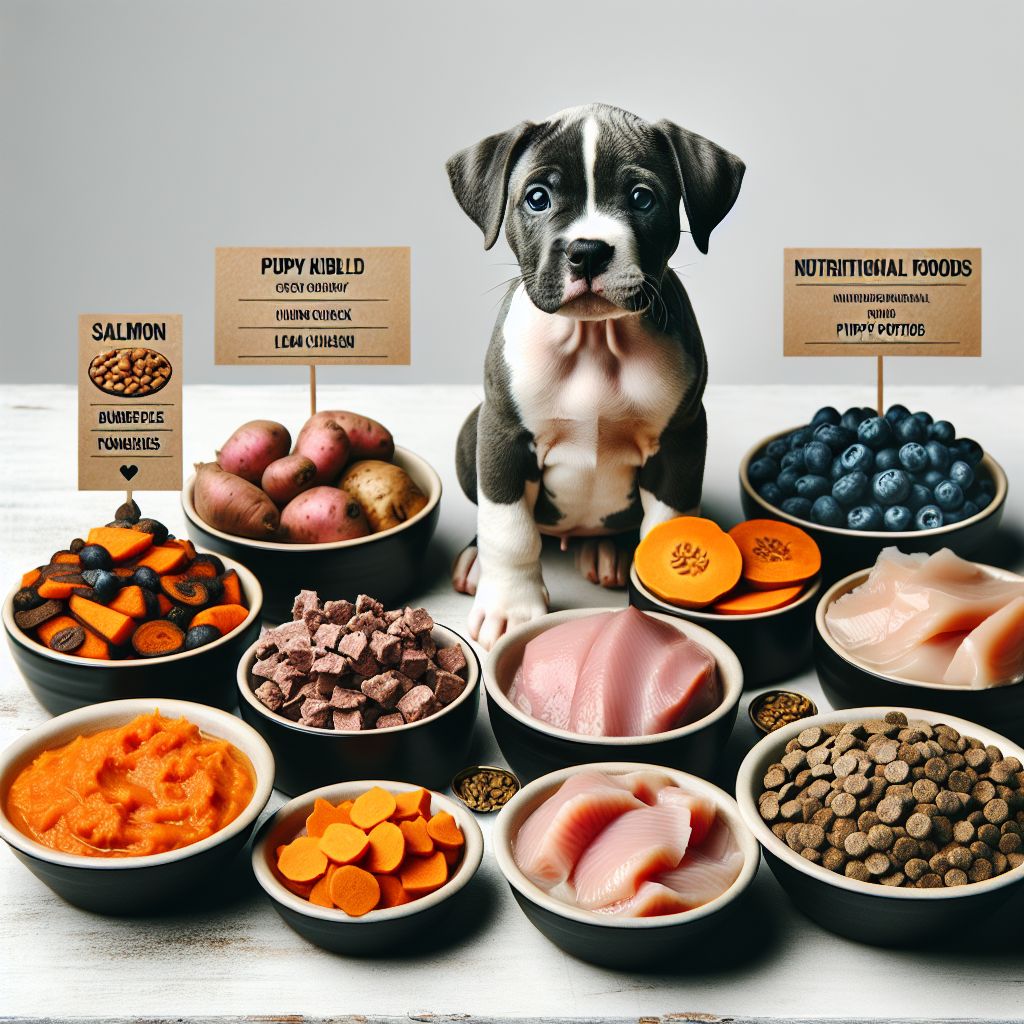
Protein is crucial, especially for Pitbull puppies, who are known for their muscular build. However, not all proteins are created equal. Look for sources like chicken, beef, or fish, which provide the amino acids your puppy needs to build strong muscles. Avoid foods with “meat by-products” as the primary protein source, as these are lower in quality.
Fats: Essential for Energy and Growth
While protein builds the muscles, fats provide the energy to use them. Fats are dense in calories, giving your puppy the fuel they needs to play and grow. But here’s the kicker: the fats should be healthy. This means looking for puppy foods with sources like fish oil, which also supplies omega-3 fatty acids for brain development.
Carbohydrates: Providing Fuel for Active Puppies
Carbohydrates are like the time-release energy capsules of your puppy’s diet. They should come from wholesome sources like brown rice or sweet potatoes, which provide sustained energy and are also packed with fiber to aid digestion.
Vitamins and Minerals: Key to Overall Health
Just like kids, puppies need their vitamins and minerals to support a healthy immune system and ensure proper development. Calcium and phosphorus are particularly important for strong bones and teeth, but they need to be in the right ratio to prevent growth abnormalities.
Creating Your Pitbull Puppy’s Meal Plan
How Much to Feed: Portion Sizes Explained
Portion sizes will vary depending on the age and size of your Pitbull puppy. As a rule of thumb, puppies need about twice as many calories per pound of body weight as an adult dog. But here’s the catch: overfeeding can lead to obesity and joint problems. Stick to the feeding guidelines on your puppy food’s label as a starting point, and adjust as needed based on your puppy’s growth and activity level.
Feeding Schedule: Timing Meals for Optimal Health
When it comes to mealtime, consistency is key. Young puppies, up to six months old, should be fed three to four times a day. As they grow, you can reduce feeding to twice a day. Here’s a tip: establish a feeding routine to help regulate your puppy’s digestion and energy levels throughout the day.
For example, a 3-month-old Pitbull puppy might need about 1 cup of puppy food spread over three meals a day, while a 6-month-old puppy might eat 2 cups of food over two meals. Always ensure fresh water is available at all times.
Remember, these are just guidelines. You know your puppy best, so be prepared to adjust as they grow and their appetite changes. For more detailed information, you can refer to this Pitbull feeding chart.
Supplementing Your Pitbull Puppy’s Diet
Even with the best puppy food, some Pitbulls might need a little extra nutritional boost. This is where supplements can come into play. However, they should never replace a balanced diet and should only be used under the guidance of your veterinarian.
When Supplements Are Necessary
Supplements might be necessary if your puppy is showing signs of deficiencies or for specific health needs. For example, if your puppy has a dull coat or dry skin, an omega-3 supplement could help. Or, if they’re not gaining weight as they should, a high-calorie supplement might be recommended.
Always consult your vet before adding any supplements to your puppy’s diet to ensure they are necessary and appropriate for your puppy’s specific health needs.
Choosing the right supplements is crucial. Opt for high-quality brands that are specifically formulated for puppies, and avoid anything with artificial additives or fillers.
Feeding Techniques and Best Practices
Transitioning Foods: When and How
There will come a time when you’ll need to transition your Pitbull puppy from puppy food to adult food. This is usually around 12 to 18 months of age. The switch should be gradual, throughout 7 to 10 days, mixing increasing amounts of the new food with the old. This helps prevent digestive upset.
Monitoring Your Puppy’s Weight and Health
Keep an eye on your puppy’s weight and body condition. You should be able to feel their ribs but not see them. If you’re unsure, your vet can help you assess your body condition and adjust your diet accordingly.
Feeding your Pitbull puppy doesn’t have to be complicated. With the right knowledge and a bit of attention to detail, you can set them up for a healthy, happy life. Remember, your vet is your partner in your puppy’s health, so don’t hesitate to reach out with any questions or concerns. For a detailed guide on what to feed your Pitbull puppy, consider reading the Pitbull Feeding Chart by Canine Journal.
Common Pitfalls in Feeding Pitbull Puppies
Let’s tackle some common feeding mistakes to avoid. First off, overfeeding is a big no-no. It can lead to obesity and associated health problems like joint issues and heart disease. Also, be cautious with treats. They should make up no more than 10% of your puppy’s daily calorie intake. And be wary of foods that are toxic to dogs, like chocolate, onions, and grapes. For a comprehensive guide on what to feed your Pitbull puppy, consider reading this Pitbull Feeding Chart.
Avoid Overfeeding: Recognizing the Signs
Recognizing the signs of overfeeding is crucial. If your puppy is gaining weight too quickly or has a bloated belly after eating, it might be time to cut back on the portions. A healthy puppy should have a visible waist and you should be able to feel their ribs without a thick layer of fat over them.
Navigating Food Allergies and Sensitivities
Food allergies and sensitivities can also pose challenges. If you notice your puppy has itchy skin, digestive upset, or chronic ear infections, it might be time to discuss a food-elimination diet with your vet. This process involves feeding a limited-redient diet to identify the allergen.
FAQs
You’ve got questions, I’ve got answers. Let’s dive into some frequently asked questions to give you the clarity you need for feeding your Pitbull puppy.
How often should I feed my pitbull puppy?
Young Pitbull puppies should be fed three to four times a day. As they grow older, you can reduce this to twice a day. Consistency is key, so try to feed them at the same times every day to establish a routine.
Is raw food suitable for pitbull puppies?
Raw diets are a topic of debate. While some owners swear by them for their nutritional benefits, they can pose risks like bacterial contamination and nutritional imbalances. If you’re considering a raw diet, it’s crucial to consult with a vet who’s knowledgeable in raw feeding to ensure it’s done safely.
What are the signs of a poor diet in puppies?
A poor diet can manifest in several ways. Dull coats, lethargy, poor growth, and digestive issues are all red flags. If you’re seeing these signs, it’s time to reassess your puppy’s diet and consult with your vet.
Can I give my pitbull puppy human food as treats?
While some human foods are safe in moderation, others can be harmful. Stick to healthy options like carrots or apple slices, and avoid anything with artificial sweeteners, especially xylitol, which is toxic to dogs.
How do I transition my puppy to adult dog food?
Transitioning to adult food should be done gradually over a week or so. Start by mixing a small amount of adult food with the puppy food, and slowly increase the adult food while decreasing the puppy food until the switch is complete.
Feeding your Pitbull puppy doesn’t have to be a daunting task. With the right knowledge and guidance, you can provide a diet that supports their growth and sets them up for a long, healthy life. Remember, when in doubt, your vet is just a phone call away.