When you bring a pitbull puppy into your home, you’re not just getting a pet; you’re adding a new member to your family. And just like any other family member, you want to ensure they have the best possible start in life. One of the most crucial aspects of raising a healthy pitbull puppy is how you store their food. Proper storage can mean the difference between a thriving pup and one that’s not getting the nutrient they need.
Key Takeaways
- Airtight containers are crucial for maintaining the freshness of your pitbull puppy’s food.
- Storing food in a cool, dry place away from sunlight helps preserve its nutritional value.
- Regularly checking for signs of spoilage can prevent health issues.
- Choosing the right material for your storage container can protect your puppy’s food from contaminants.
- Understanding the importance of food storage is key to ensuring your pitbull puppy’s longevity and well-being.
Pitbull Puppy Power: Storing Kibble for Optimal Health
So, why does storage matter so much? Think of it this way: the same way you wouldn’t leave a fresh steak out on the counter for days, you shouldn’t let your puppy’s kibble sit unprotected. The elements—air, moisture, and extreme temperatures—can wreak havoc on the quality of dry dog food. Storing it properly is essential to keep it tasty and, most importantly, nutritionally sound.
Why Storage Matters for Your Pup’s Kibble
When it comes to your pitbull puppy’s health, their diet is the foundation. Kibble that’s exposed to air and humidity can quickly become stale, lose its crunch, and begin to grow mold or bacteria. Not only does this mean your puppy may turn their nose up at mealtime, but it can also lead to stomach upset or more serious health concerns.
Besides that, proper storage helps maintain the integrity of the vitamins and minerals in the food. When exposed to air, these nutrients can degrade, leaving your puppy without the essential building blocks for strong bones, a robust immune system, and a shiny coat.
Moreover, an open bag of dog food can attract pests like ants, cockroaches, or rodents. These unwelcome guests can contaminate your puppy’s food with waste or spread disease. Therefore, storing your puppy’s food securely is crucial to keep it clean and safe.
Let’s dive into how to keep your pitbull puppy’s food at its best.
Kibble Container Wisdom: Choosing the Best for Your Bully
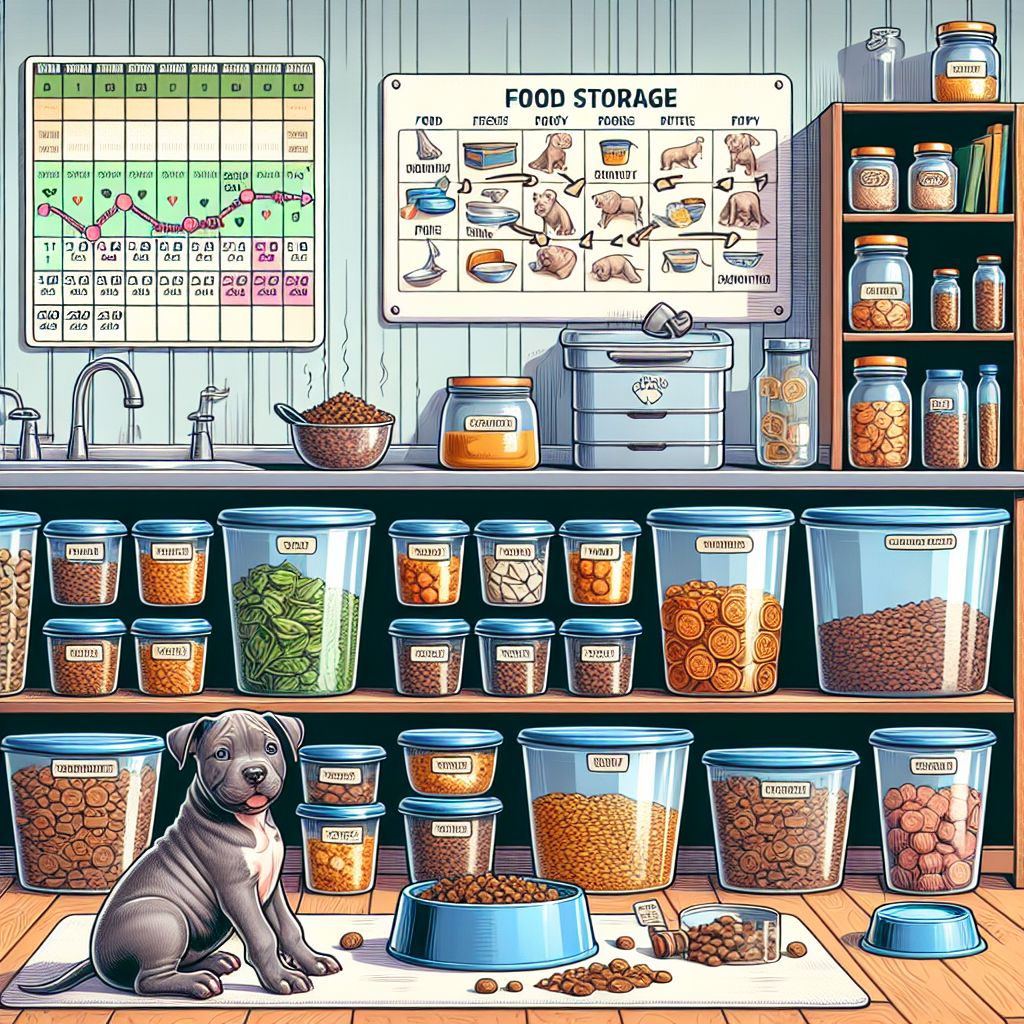
Now, let’s talk containers. Not all storage options are created equal, especially when it comes to keeping your pitbull puppy’s food fresh and nutritious. The right container will be a fortress against the elements and pests, safeguarding the kibble’s quality until it’s time to refill the bowl. For more insights, check out The Ultimate Guide to Dog Food Storage Containers.
When selecting a container, size is also a factor. You want one large enough to hold a standard bag of puppy kibble but not so large that the food sits for too long, which can lead to staleness even if the container is airtight. Rotate the food supply regularly; freshness is not just about sealing it away but also about keeping the food rotation consistent and timely.
Remember, the best container for your pitbull puppy’s food is one that fits into your life as seamlessly as it fits the kibble. It should be convenient for you to use daily, fit well in your storage space, and be easy to clean. Convenience will encourage you to use it correctly, ensuring that food storage becomes a simple part of your routine.
Material Matters: What Your Container is Made Of
Material is the first consideration. Plastic is a popular choice—it’s lightweight, durable, and often airtight. However, make sure it’s BPA-free to avoid any chemicals leaching into the food. Stainless steel is another great option; it’s sturdy, doesn’t absorb odors, and is generally more resistant to scratching or denting, which can harbor bacteria. Glass is less common due to its weight and breakability, but it’s non-porous and keeps food exceptionally fresh if you can store it safely.
Some people might consider using a repurposed container they already have at home, like a large bucket or bin. If you go this route, be absolutely sure it’s clean and made of a non-toxic material. Containers that previously held chemicals or non-food items might seem clean, but they could still have residue that could contaminate your puppy’s food.
Sealing the Deal: The Importance of Airtight Containers
Airtightness is non-negotiable. A good seal keeps out oxygen, moisture, and pests—all of which can spoil the food or make it less appealing to your pup. An airtight container will also help contain the food’s odor, which is a plus for keeping your home smelling fresh. Look for containers with a rubber or silicone seal and locking mechanisms that click or snap shut firmly.
If you’re using a container without a dedicated airtight seal, you can keep the food in its original bag and roll it down tightly before securing it with a clip. This can add an extra layer of protection against air and pests.
Stowing the Chow: Ideal Locations for Food Storage
Once you’ve chosen the perfect container, finding the right spot to store it is your next step. You’ll want to keep the food in a cool, dry place to prevent any risk of the kibble degrading or becoming a breeding ground for bacteria. A pantry or cupboard away from any heat sources is ideal. Avoid garages or sheds where temperatures can fluctuate wildly, which is not conducive to maintaining food quality.
Humidity is another enemy of stored kibble. If you live in a particularly humid climate, consider placing a dehumidifier in the room where you store the food, or choose a storage area that’s naturally less humid, like a closet or a utility room.
Light, especially direct sunlight, can also affect the quality of your puppy’s food. UV rays can degrade certain nutrients, so keeping the container in a dark place or one that doesn’t get much natural light is best.
By taking the time to choose the right container and storing it properly, you’re making a small but significant investment in your pitbull puppy’s health and happiness. A well-fed puppy is a happy puppy, and a happy puppy makes for a happy home.
Temperature and Humidity: Finding the ‘Sweet Spot’ for Storage
Temperature and humidity control are paramount when it comes to preserving the quality of your pitbull puppy’s food. The ideal storage temperature is below 80°F (27°C), as higher temperatures can speed up the degradation of nutrients and increase the risk of bacterial growth. To maintain nutritional integrity and prevent spoilage, you need to find the ‘sweet spot’ for storing your puppy’s kibble.
Humidity is just as crucial. Excess moisture can lead to mold and mildew, which are unappetizing and potentially dangerous if ingested. Aim for a humidity level below 15% to keep the kibble dry and safe. This can be achieved by storing the food in airtight containers and placing them in areas of your home that are naturally cooler and drier. Basements can be a good option, as long as they’re not prone to dampness.
Remember, your chosen location should be easily accessible for you but out of reach for your curious pup. By keeping their food stored properly, you’re taking a proactive step towards preventing health issues and ensuring they have a long, happy life by your side.
By now, you’re equipped with all the knowledge you need to store your pitbull puppy’s food correctly. It’s a simple yet vital aspect of their care that can significantly impact their overall health. With the right container, stored in the perfect spot, you’re not just keeping their food fresh – you’re ensuring that every meal is as nutritious as the first. And that’s a commitment to your puppy’s well-being that will yield countless rewards in the form of tail wags, healthy growth, and enduring companionship.
In summary, proper food storage for your pitbull puppy is about more than just keeping kibble from going stale. It’s about safeguarding their health, ensuring the longevity of their diet’s nutritional value, and providing them with the best quality meals you can. So take the time to choose the right container, find the ideal storage spot, and make mealtime a highlight of your pup’s day, every day.
FAQs
How should I store Pitbull puppy food to maintain freshness?
- Store Pitbull puppy food in a cool, dry place away from direct sunlight. Use airtight containers to seal in freshness and prevent exposure to air and moisture.
What type of container is best for storing Pitbull puppy food?
- Opt for food-grade plastic or metal containers with tight-sealing lids. These help to keep out pests and maintain the food’s freshness for longer periods.
Can I store Pitbull puppy food in its original packaging?
- While some commercial dog food bags are designed for storage, transferring the food to an airtight container can offer better protection against pests, moisture, and air exposure, prolonging freshness.
Should I refrigerate or freeze Pitbull puppy food?
- Dry dog food typically doesn’t need refrigeration or freezing if stored properly in a cool, dry place. However, if you buy in bulk or want to extend shelf life, freezing unopened bags can be beneficial. Just ensure proper thawing before feeding.
How long can I keep an opened bag of Pitbull puppy food?
- Once opened, aim to use the food within 6-8 weeks. Proper storage in an airtight container can help maintain freshness during this time frame.